Landmark guides
Marbella landmarks
Seven landmarks, from the old town to the coast and mountains. Use these guides to choose a compact town walk or a separate nature outing, with official sources and photographs of each place.
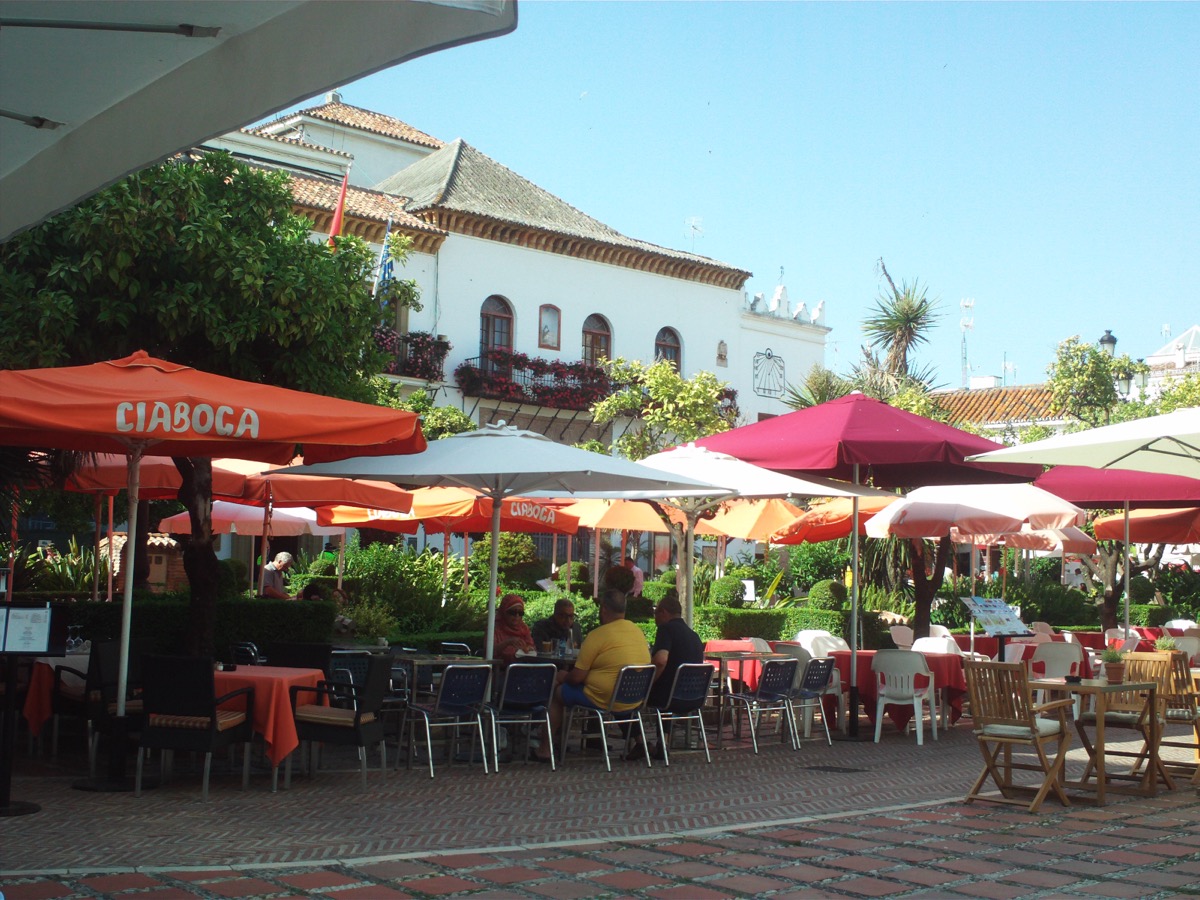
Build a central walking route
Start with Plaza de los Naranjos, then combine the Encarnación church and surviving castle walls. Alameda offers a change of setting before Avenida del Mar leads towards the waterfront. Choose the order according to where you arrive and the interests of your group, leaving time to look closely rather than treating every stop as a quick photograph.
Give nature outings their own plan
Artola’s protected dunes and the Juanar–La Concha route require separate travel and preparation. The dune landscape is a habitat to observe from designated routes; the mountain route includes exposed terrain described by the tourism authority. A pin on a map does not settle transport, return arrangements, present conditions or the suitability of a route for your group.
Use sources for the right questions
Each guide separates what the official heritage or nature account describes from practical choices for a visit. Source links provide context, while current local information is needed for openings, temporary restrictions and transport. Photo credits identify the image source and licence. Read the individual guide before deciding which places fit your day, and keep the next stop flexible.
Choose a landmark

Marbella's old-town square is a useful starting point for understanding the town beyond the seafront. Look above the terraces: the surrounding civic and religious buildings tell a longer story than the menus.
Photo credit: Ypsilon from Finland / Wikimedia Commons / CC0 (resized) · Licence
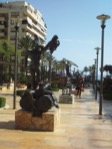
Avenida del Mar turns the walk from the town centre to the sea into an outdoor sculpture stop. It fits naturally between the shade of Alameda and a longer stroll along the waterfront.
Photo credit: Ypsilon from Finland / Wikimedia Commons / CC0 (resized) · Licence
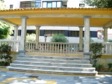
Alameda is a pause in a central Marbella walk: a place to look at the greenery before moving between the old town and the sea. Give it a little attention rather than using it only as a shortcut.
Photo credit: Zarateman / Wikimedia Commons / CC0 (resized) · Licence

La Concha is Marbella's mountain backdrop, but reaching it is a hiking outing rather than an extension of a seafront stroll. Start by reading the official PR-A 168 description and deciding whether the terrain suits your group.
Photo credit: Forbes Johnston / Wikimedia Commons / CC BY 2.0 (resized) · Licence
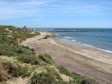
Artola offers a different view of Marbella's coast: sand, dune vegetation and a protected landscape beside Cabopino. Visit to understand the dunes as a habitat, not simply as scenery on the way to the beach.
Photo credit: Olaf Tausch / Wikimedia Commons / CC BY 3.0 (resized) · Licence

The Encarnación church is a substantial landmark among Marbella's narrow old-town streets. The square outside lets you study its scale and entrance even when an interior visit is not possible.
Photo credit: Tyk / Wikimedia Commons / CC BY-SA 3.0 (resized) · Licence
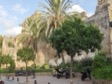
Marbella's castle and surviving walls reveal an older town behind the shopping streets and terraces. Approach them as fragments of a historic defensive enclosure, with an exterior walk that rewards looking closely at the masonry.
Photo credit: Tyk / Wikimedia Commons / CC BY-SA 3.0 (resized) · Licence