Castillo y Murallas de Marbella
Marbella's castle and surviving walls reveal an older town behind the shopping streets and terraces. Approach them as fragments of a historic defensive enclosure, with an exterior walk that rewards looking closely at the masonry.
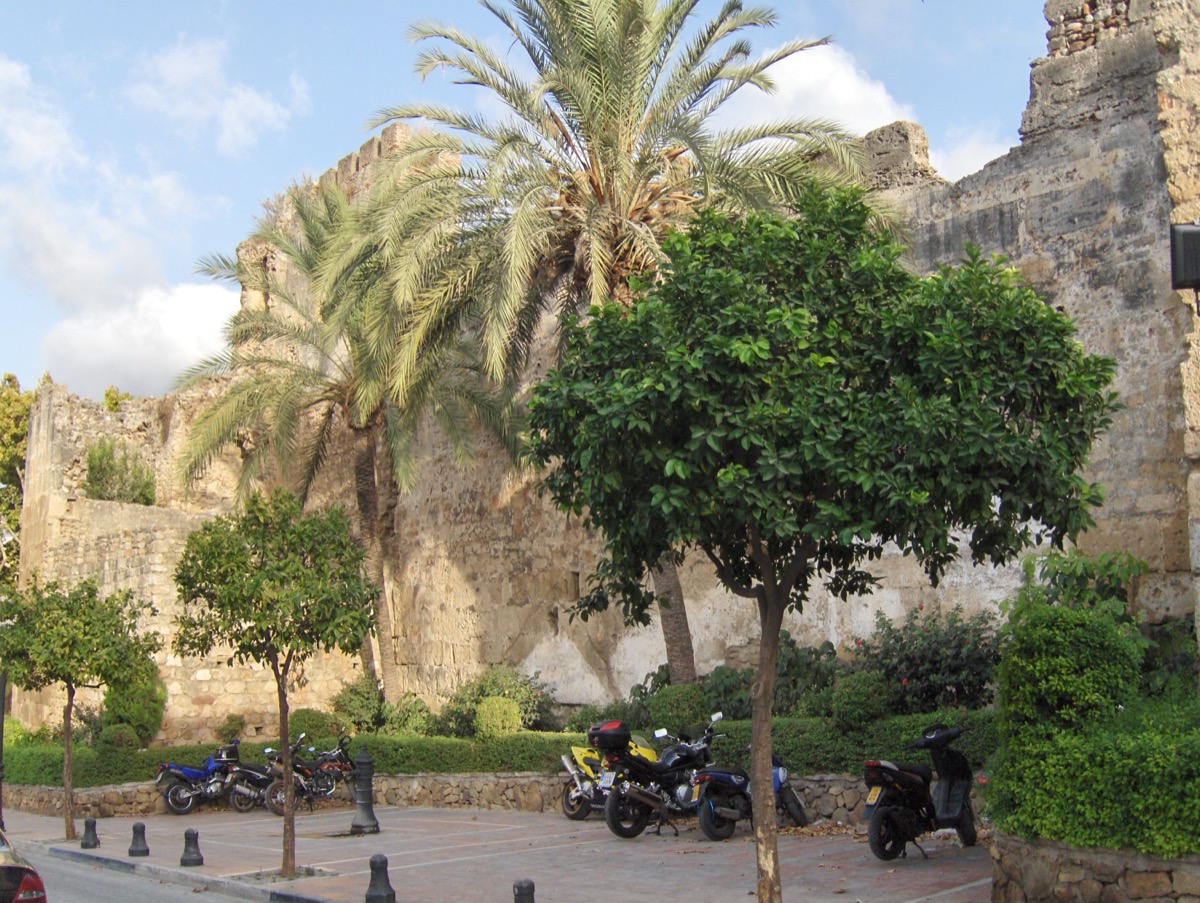
What to notice
The council presents the site as Castillo de Marbella: Alcazaba y Muralla. The surviving fabric is the main attraction, rather than a promise of furnished castle rooms. Compare the scale of the walls with the surrounding streets, and use the official heritage account to put what you can see into context. An exterior view cannot show every phase of the site's history.
Where and what to combine
Search for Castillo de Marbella, then follow the surrounding old-town streets to see the visible wall sections. Combine this stop with Plaza de la Iglesia and Plaza de los Naranjos. Keep the map handy: seeing one stretch of masonry does not mean you have reached an entrance or a continuous visitor circuit around the entire enclosure.
Planning your visit
Plan an exterior visit unless current municipal information explicitly confirms an interior activity or guided opening. Respect barriers and adjoining properties, and do not climb the historic fabric. Read local signs for any temporary restrictions. A short look works within a town walk; anyone wanting a detailed archaeological visit should check the council's current heritage programme first.
A more detailed visit plan
Give this stop a clear purpose before arriving: you are looking for surviving parts of a defensive enclosure within a later urban setting. Rather than expecting a single complete castle façade, compare the sections you can see with the streets and buildings around them. The official council page is useful for recognising the monument and following its historical account; local signs help identify what a particular stretch of masonry represents. If the view is partly obscured or a route is restricted, use another public street and leave adjoining property alone. An incomplete view is preferable to treating a private doorway as part of a visitor route.
For a broader old-town circuit, begin at the orange-tree square, continue to the church, then use the map to find the visible walls. You can also reverse this sequence if you are approaching from the other side of the old town. Focus on the different functions of the three stops: civic square, religious building and defensive fabric. This makes the walk more informative without inventing a date for every stone. If archaeology is the main interest, consult the current municipal programme for a guided opportunity or additional interpretation rather than assuming there is a daily interior tour. Keep map links and official heritage links for their distinct purposes: one helps you locate the site, while the other explains why it matters. Neither alone confirms an opening or an uninterrupted route around the enclosure.