Plaza de los Naranjos
Marbella's old-town square is a useful starting point for understanding the town beyond the seafront. Look above the terraces: the surrounding civic and religious buildings tell a longer story than the menus.
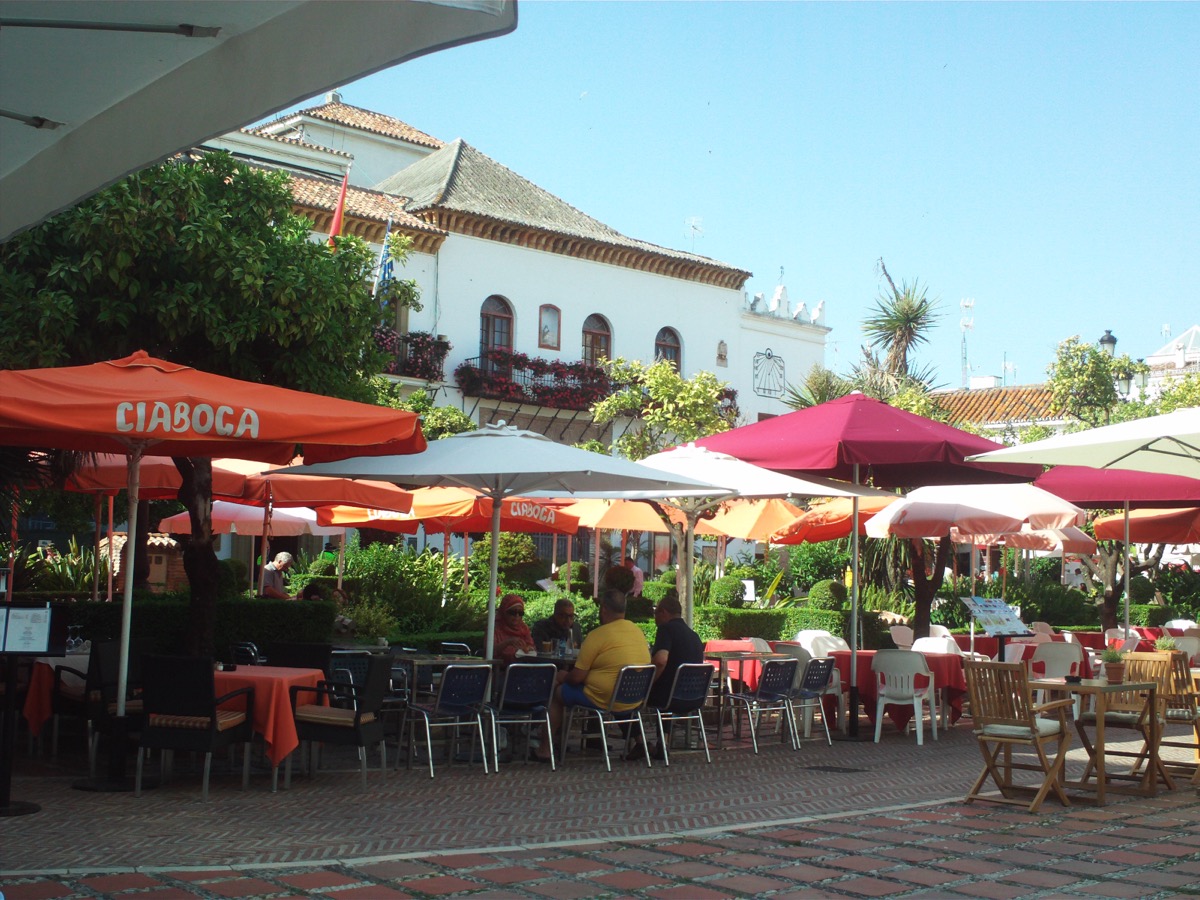
What to notice
The square became a civic centre after Marbella's conquest by the Catholic Monarchs. The town hall, Casa del Corregidor and Ermita de Santiago give you three different façades to compare. Its present name comes from orange trees planted in 1941; the planting has changed through the square's history. Take a circuit before choosing somewhere to sit.
Where and what to combine
Search the map for Plaza de los Naranjos, Marbella, then approach through the old-town streets on foot. Combine it with Plaza de la Iglesia and the visible castle walls, returning by a different lane rather than retracing every step. The square works well as an orientation stop before exploring the smaller streets.
Planning your visit
Separate the public square from the businesses and buildings around it: terrace seating is part of a café visit, and an open square does not guarantee access to interiors. Check the tourist office's own current information if you need assistance. Leave room in the plan for wandering, and keep entrances clear when taking photographs.
A more detailed visit plan
Make the square the beginning of a route rather than a list of isolated photo stops. First identify the three buildings named in the heritage account, then choose which streets you want to follow afterwards. If the priority is architecture, continue to the church and walls; if it is a change of setting, head towards Alameda and the sculpture avenue. Agree on a meeting point before splitting up, since the surrounding small streets can lead members of a group in different directions. A café break can fit around the walk, but choose a terrace after looking at its current menu rather than assuming the square has one common price or service standard.
The source link explains the square's history; the tourist office link serves a different purpose, helping with current practical questions. Neither establishes that every adjoining building is open today. If someone needs a route without steps or an interior visit, ask about that specific need before finalising the itinerary. For a photograph, move around the public space to frame trees against a façade without standing in a doorway or occupying a café seat. You can enjoy the square without adding a purchase, a building visit or a fixed time allocation to the plan. Keep the next stop optional so the route can adapt to the group's pace.